
Ultrasonic vs. Cup Anemometer: Which Wind Sensor Should You Choose?
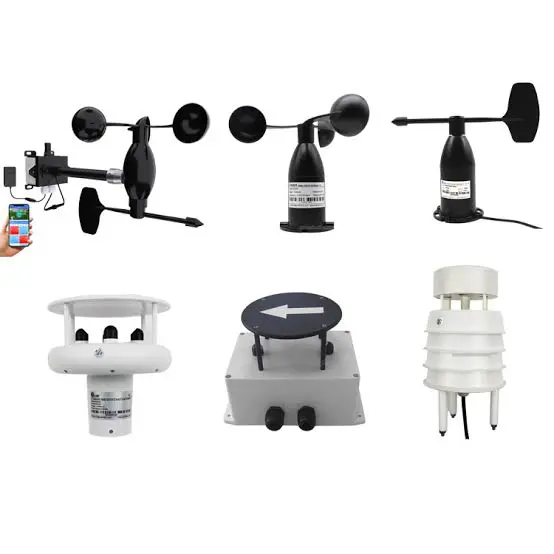
Wind measurement systems use different sensor technologies depending on the application, required data quality, operating environment, and maintenance plan. Two common options are cup anemometers and ultrasonic anemometers.
A cup anemometer measures wind speed through the rotation of cups exposed to airflow. An ultrasonic anemometer estimates wind conditions using the travel times of ultrasonic signals between transducers.
Neither technology is automatically the best choice for every project. Understanding how each works—and which specifications matter for the application—is more useful than relying on broad claims about superiority.
1. How Does a Cup Anemometer Work?

A cup anemometer uses cups mounted on an assembly that rotates in response to airflow. The instrument measures the rotation and converts it into a wind speed value according to its design and calibration.
Cup anemometers are an established option in meteorological observation and other wind measurement applications. They can be appropriate where their measurement characteristics, environmental limits, and maintenance requirements meet the project specification.
Because the design contains moving components, wear, contamination, bearing condition, and other mechanical factors may need to be considered during maintenance planning.
2. How Does an Ultrasonic Anemometer Work?
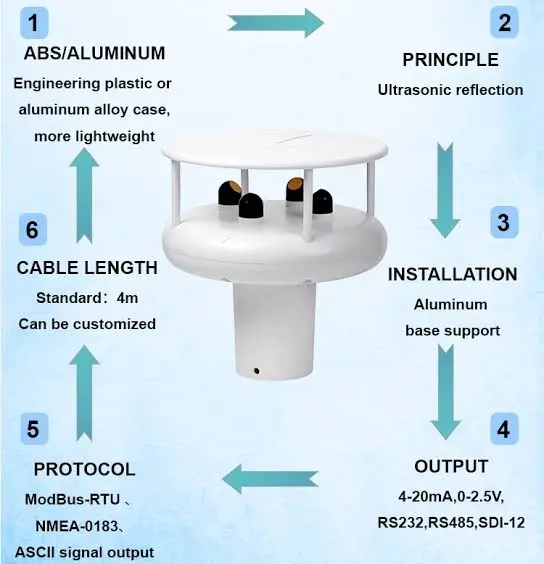
An ultrasonic anemometer sends sound signals between transducers and measures their travel times. Airflow changes the travel time in different directions. The instrument uses these differences to estimate the wind component along the measurement path.
Multi-path designs can combine measurements to estimate wind speed and direction across multiple axes. The exact measurement method, output characteristics, and performance depend on the instrument's design.
Many ultrasonic anemometers have no moving mechanical parts. This can reduce maintenance associated with bearings and rotating assemblies, but it does not eliminate every maintenance requirement. Transducers can still be affected by contamination, obstruction, icing, and other environmental conditions.
3. Key Differences at a Glance
| Comparison factor | Cup anemometer | Ultrasonic anemometer |
|---|---|---|
| Measurement principle | Rotation caused by airflow | Ultrasonic signal travel-time measurements |
| Moving components | Yes, in the rotating assembly | Typically no moving mechanical parts |
| Maintenance considerations | May include inspection of bearings and rotating parts | May include inspection for contamination, obstruction, or icing |
| Wind direction | May require a separate vane or another arrangement | Many multi-axis models measure speed and direction |
| Cold-weather operation | Check mechanical icing risk and model-specific protection | Check transducer icing risk and whether heating is provided |
| Data interfaces | Depends on the model | Depends on the model |
| Best choice | Depends on required performance, conditions, and system design | Depends on required performance, conditions, and system design |
This table describes general design differences. It is not a substitute for comparing the datasheets of the specific models under consideration.
4. Accuracy: Compare Specifications, Not Technology Labels
It is tempting to assume that one sensor technology is always more accurate than the other. That conclusion is not justified without considering the exact instruments and measurement conditions.
When comparing accuracy, check:
- The manufacturer's definition of accuracy.
- The measurement range over which the specification applies.
- Reference conditions and stated limitations.
- Response characteristics and low-wind performance where relevant.
- Calibration and verification information.
- Installation requirements and the influence of airflow around the instrument.
For projects where data quality is critical, compare documented performance and test conditions rather than assuming that the newer or more complex technology is automatically superior.
5. Maintenance and Lifecycle Considerations
Maintenance requirements can affect the practical cost of operating a wind measurement system, particularly at remote sites where service visits are difficult.
Cup anemometers may require attention to rotating parts, bearings, and mechanical condition. Ultrasonic instruments avoid these particular mechanical components in many designs, but may still require inspection of sensing paths, protective features, mounting hardware, connectors, and data quality.
In either case, consider access to the installation, spare parts, service arrangements, cleaning requirements, and the consequences of missing or unreliable data.
Avoid assigning a universal maintenance cost or service-life advantage to either technology without evidence from the specific models and operating conditions.
6. Environmental Conditions and Icing
Wind sensors installed outdoors can face rain, dust, salt, temperature extremes, vibration, and freezing precipitation. Environmental suitability should be evaluated against the conditions expected at the site.
For cold-weather installations, review the manufacturer's information about icing, heating options, power requirements, and operating limits. A heater may reduce icing risk under specified conditions, but it should not be interpreted as a guarantee of uninterrupted measurement in every freezing environment.
For coastal installations, check the enclosure materials, corrosion protection, connectors, and any relevant environmental testing. Do not assume that an outdoor enclosure rating alone proves resistance to salt corrosion.
7. Integration and Installation
The sensor must integrate with the project's data acquisition system. Confirm supply voltage, output interface, communication protocol, sampling and reporting settings, connector pinout, and mounting requirements.
Installation location also affects measurement quality. Nearby structures and obstacles can disturb airflow. Follow the applicable project specification and the manufacturer's installation guidance when selecting the mounting position and height.
8. Which Technology Should You Choose?
A cup anemometer may be appropriate when its documented performance, mechanical design, environmental limits, and maintenance plan meet the project needs.
An ultrasonic anemometer may be appropriate when the project benefits from a design without moving mechanical parts, integrated multi-axis wind measurement, or particular interface and installation features offered by the model.
For both technologies, evaluate the complete instrument rather than the technology name alone.
- Define the required wind measurement variables.
- Set the required measurement range and data quality.
- Assess expected environmental conditions.
- Compare interface, mounting, and power requirements.
- Review maintenance needs and available technical support.
- Verify the specifications against the project requirements.
Conclusion
Ultrasonic and cup anemometers use different measurement principles, and each design has its own considerations. The appropriate choice depends on required performance, operating conditions, integration requirements, and lifecycle planning.
For a step-by-step selection process, read our guide to choosing a wind speed sensor. For a broader overview of meteorological measurement, see our Weather Sensors: Types, Applications & Selection Guide.
Explore the relevant meteorological sensor category or contact Virtue Instrument to discuss your project requirements.
References and Further Reading
- World Meteorological Organization (WMO), Guide to Instruments and Methods of Observation (WMO-No. 8).
- Technical datasheets and installation manuals for the specific cup and ultrasonic anemometers being compared.
- Relevant calibration reports or independent test documentation, where available for the candidate instruments.
Technical note: This comparison describes general sensor design principles. It does not claim that all products within either category have identical performance.